(1/2)sin-1x=?
A.
sin^-1sqrt((1-x^2)/(1+x^2)
B.
tan^-1(1-sqrt(1-x^2))/x
C.
sin^-1(1+sqrt(1-x^2))/x
D.
cos^-1((sqrt(1+x))/(1-x))

সঠিক উত্তরঃ
B.
tan^-1(1-sqrt(1-x^2))/x
Explanation: 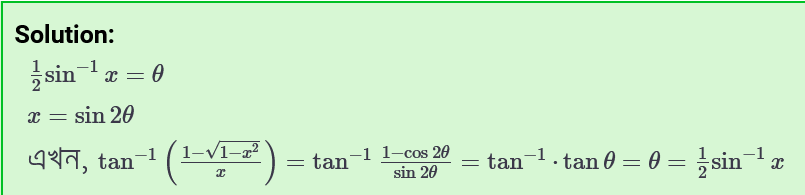
Related Questions (Any University/Year)
- tan(cos−1a)=sin(tan−11/2) হলে, a=?
- Cot(tan^-1 *1/3+cot^-1*1/3)এর মান কত?
- sin cot-1 cos tan-1x =?
- Tan^-1+tan^-2+tan^-1 3 এর মান কত?
- sin^2(cos^-1(1/x))-cos^2(sin^-1(1/sqrtx))= 2/9; যেখানে
- cosθ = cosɑ হলে, θ এর মান কত?
- কোন ত্রিভুজের দুটি কোণ tan-12 ও cot-12 হলে অপর কোণ কত?
- tan-1x এর জন্য নিচের কোনটি সঠিক?
- cosθ=0 হলে θ এর মান-(n এর মান শুণ্য বা একটি পূর্ণ সংখ্যা)-
- 2 cosx+1=0 এর সমাধান নিচের কোনটি?
- tan2θ+cot2θ=2 হলে, 0°<θ<360° ব্যবধিতে θ এর কয়টি মান পাওয়া যাবে?
- sinθ−2=cos2θ হলে, θ=?[−2π<θ<2π]
- sec^2(cot^-1(1/2))+cosec^2 (tan^-1(1/2)) এর মান কত?
- . cos-1 x+ cos-1 y = হলে, দেখাও যে, x² + y² = 1.
- sin(2sin-1x) =?
- 2tan^-1(sqrt(a/b)tan(theta/2))=?
- tan2x + cot2x = 2 হলে x =?
- tan(3tan-1x)=?
- tan^-1 (2/3) =?
- tan-1x+tan-1y+tan-1z= হলে x+y+z=?
- θ=sin-1(3/5) হলে, (1-tan^2theta)/(1+tan^2theta)=?
- sec^-1(x)=cos^-1(1/2)+sin^-1(5/(3sqrt3)) সমীকরণটির সমাধান কোনটি?
- pi/4-tan^-1(1/3) = কত?
- tan^2x+sec^2x=3 ; x=?
- tan^-1 =A, tan^-1= B এবং A+B+C =πনিচের কোন সম্পর্কটি সত্য?