The Geneva Convention deals with _

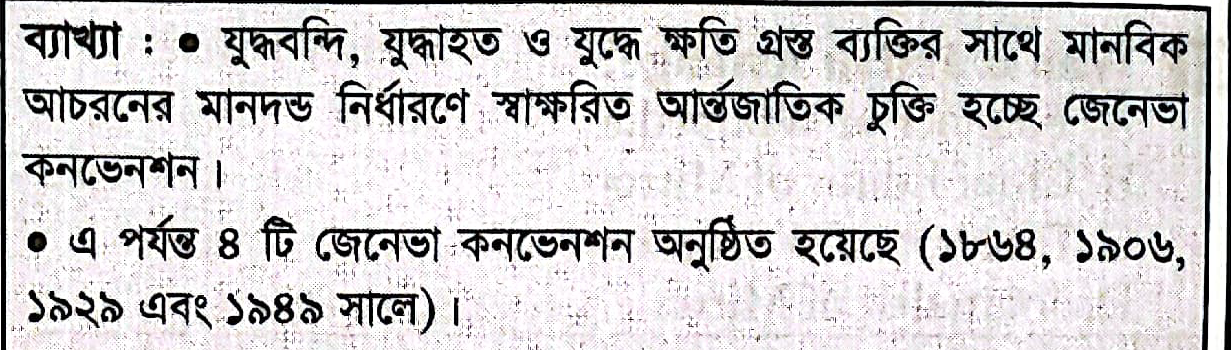
Geneva Convention: A Comprehensive Overview
The Geneva Conventions are a series of international treaties that establish standards of international law for humanitarian treatment in war. They primarily deal with the conduct of war, aiming to minimize suffering and protect vulnerable individuals during armed conflict. 🛡️
Key Areas Covered
- Treatment of Wounded and Sick Combatants: Ensures humane treatment and medical care for soldiers injured or fallen ill during battle. 🤕
- Treatment of Prisoners of War (POWs): Defines the rights and protections afforded to captured soldiers, including proper housing, food, and medical attention. 👮
- Protection of Civilians: Safeguards the rights and well-being of civilians caught in conflict zones, prohibiting direct attacks and ensuring access to essential resources. 🧑👩👧👦
- Limitations on Weapons and Tactics: Restricts the use of certain weapons and tactics that cause unnecessary suffering or indiscriminate harm. 💣
The Four Geneva Conventions
The Geneva Conventions consist of four distinct treaties, each focusing on a specific category of persons protected during wartime:
- First Geneva Convention (1864): Concerning the Amelioration of the Condition of the Wounded and Sick in Armed Forces in the Field. 🚑
- Second Geneva Convention (1906, revised 1929, 1949): Concerning the Amelioration of the Condition of Wounded, Sick and Shipwrecked Members of Armed Forces at Sea. 🚢
- Third Geneva Convention (1929, revised 1949): Relative to the Treatment of Prisoners of War. 🔒
- Fourth Geneva Convention (1949): Relative to the Protection of Civilian Persons in Time of War. 🏘️
Additional Protocols
Two Additional Protocols were added in 1977 to update the Conventions and address modern forms of warfare:
- Protocol I (1977): Relating to the Protection of Victims of International Armed Conflicts.
- Protocol II (1977): Relating to the Protection of Victims of Non-International Armed Conflicts.
Significance and Impact
The Geneva Conventions are fundamental to international humanitarian law. They provide a framework for ethical conduct during war and aim to reduce the human cost of conflict. Violations of the Geneva Conventions are considered war crimes. ⚖️
Summary Table
| Convention | Focus | Year |
|---|---|---|
| First Geneva Convention | Wounded and Sick (Land) | 1864 |
| Second Geneva Convention | Wounded, Sick, Shipwrecked (Sea) | 1906, 1929, 1949 |
| Third Geneva Convention | Prisoners of War | 1929, 1949 |
| Fourth Geneva Convention | Civilians | 1949 |
Adherence to the Geneva Conventions is crucial for maintaining a degree of humanity even amidst the brutality of war. 👍
```